
Side-by-Side: Why the Best Conversations Happen While Looking Away
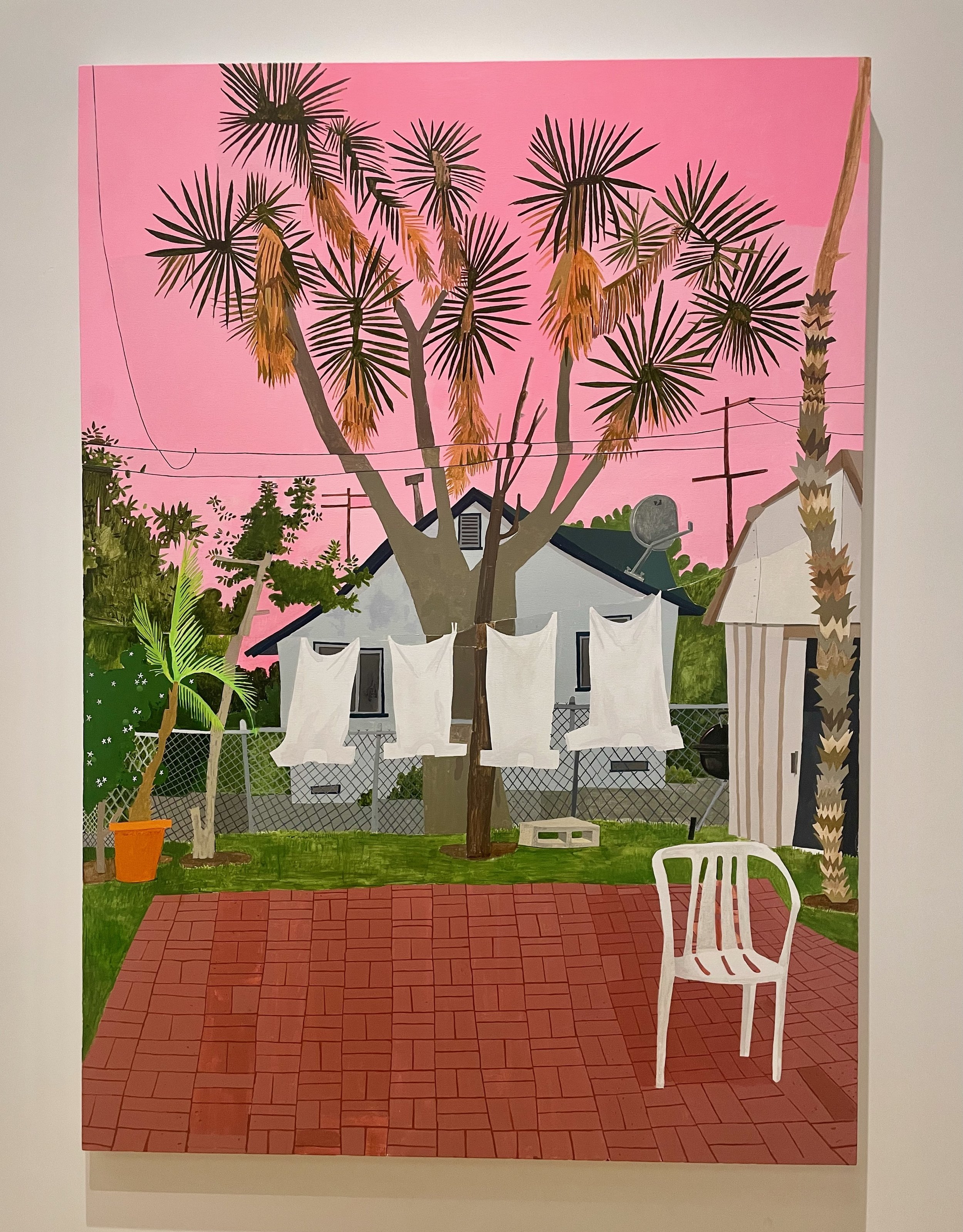
My favorite image at the Crocker Art Museum in Sacramento
When my son was a teenager, I stumbled upon a secret to communication. If we needed to “have a talk,” the worst thing we could do was sit across from each other at a table. The eye contact was too heavy. The structure of the conversation felt too combative.
Instead, the best conversations happened while we were driving. Sitting side-by-side, both looking ahead, allowed for an openness that was impossible face-to-face. Because our eyes were engaged in something shared but external, our minds were freer to talk about things that felt too heavy for a direct gaze.
What mattered wasn’t the car. It was the orientation.
Art as Shared Focus
I’ve realized that art serves this same purpose. It provides the right kind of distance. When we stand in a gallery or look at a piece of work together, the art becomes the shared point of focus. It gives us insight into how we think without the pressure of a confrontation.
I’ve always been drawn to pieces that spark curiosity. I like things that are silly but not childish, new and surprising works that reflect my playful, optimistic nature. But I also have depth beyond the whimsical. I love deep statement works that take a stand or carry real meaning, provided they don’t rely on violence or fear. For me, curiosity is the bridge. It allows us to engage with heavy topics without feeling scared by them.
When we look at art that compels or repels us, we aren’t just looking at a canvas. We are observing our own reactions.
Why This Works
This isn’t just personal preference. Research supports what happens when people slow down and look at art together.
Studies from the University of Westminster show that viewing art can reduce cortisol levels and engage "embodied cognition." This means the brain mirrors the emotion or intention seen in the artwork. Research published in the Journal of Museum Education, along with work from Harvard Project Zero, shows that structured art observation improves critical thinking by shifting people from quick judgment to reflective interpretation. Further neuroaesthetic research from University College London demonstrates that engaging with art activates dopamine-based reward systems. This allows us to explore complex ideas without triggering a defensive stress response.
The Workshops
Overwhelm lessens when attention is shared and thinking has space to slow down. It is much easier to hear one another and ourselves when we aren't under the heat of a direct gaze.
I lead small-group workshops at art museums that use this side-by-side observation to shift how people think and communicate. By using the gallery as our shared horizon, we can move past the busywork of the mind and find a clearer way forward.
Let’s work together at the art museum. Join me for a workshop or a one on one experience.
Ryan